
How to use a Fire Extinguisher: Your Complete Guide to Fire Safety
In the event of a fire, a fire extinguisher can be your first line of defense. Knowing how to effectively use a fire extinguisher at home or in the workplace could prevent a small fire from turning into a devastating blaze. Fire extinguishers are essential tools in any fire safety plan, but owning one is only half the battle—you also need to know how to use it properly.
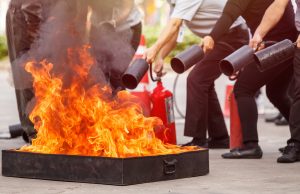
A fire extinguisher should be the first stop in case you experience a fire emergency out there. It may save hours, days, weeks, or even months if placed in the right understanding of how the fire extinguisher works and its usage, whether at home or the workplace. Fire extinguishers are indispensable equipment when preparing for emergencies, but having one is not enough; you and everyone else in your household should know how to use it.
From this guide, you will learn about fire extinguishers, including the PASS method, the different types of fire extinguishers, and how to improve fire security services. We will also look at how we can use the 4 P’s of fire safety to save ourselves, our families, and our properties. On the way, you will learn the significance of fire safety education using the case of the National Institute of Fire and Safety (NIFS) as a tool that helps people to acquire sufficient knowledge and skills to make the correct choices in fire conditions.
How to use a Fire Extinguisher: The PASS Technique
The easiest way to remember how to use a fire extinguisher is to follow the PASS technique: There are four simple steps, namely, pull, aim, squeeze, and sweep. I hope the advice in the four steps below will assist you in reacting in the fastest, most appropriate manner whenever you come across a fire.
- Pull the Pin: The first thing to do when operating a fire extinguisher is to pull the pin at the top of the machine. This pulls out the firing pin and releases the trigger that lets out the extinguishing agent. Just as important is the fact that the majority of fire extinguishers are under pressure: pulling the pin serves to release this pressure properly.
- Aim at the base of the fire: One of the biggest errors people commit is pointing the extinguisher at the fire. While this would appear to make a lot of sense, it simply doesn’t work in practice.
- Squeeze the Top Handle: Turning the handle or lever clockwise puts the extinguisher under pressure, and rotating it counterclockwise expels the extinguishing agent inside the fire extinguisher. As one can infer from the graph, the faster the rate of the release of the agent the harder one squeezes. Use the handle to cover the extinguisher and keep it as long as you use it to emit the extinguisher.
- Sweep from Side to Side: After that, step on the target point at the base of the fire, sideways, and then pull the hose backward. Take pictures from a distance and get closer as you see the intensity of the flames reducing. Keep on sweeping until the fire is out, and be careful after this, as some of the fires may flare up in some instances.
It goes without saying that if you follow the PASS method, you can make a world of difference that will guarantee you put the extinguisher to proper usage at the moment needed.
Understanding the ABCs of Fire Extinguishers
Fire extinguishers are of various types, but all are used to put out specific classes of fire. Just as important as knowing how to wield the extinguisher is identifying the kind that is appropriate for your emergency. Fire extinguishers are generally categorized based on the type of fire they are designed for:
– Class A: These extinguishers are used to put out fires that occur on ordinary combustibles such as wood, paper, textiles, etc. Class A extinguishers contain water or foam and should be used for combating Class A fires.
– Class B: Class B is used on flammable liquid fires, including petrol/electricity, oils, grease, and other flammable liquids, and it uses materials like carbon dioxide or chemical powder to cause suffocation of the fire.
– Class C: These are for use in case of electrical fire only. Water can conduct electricity, which can be dangerous, therefore, Class C extinguishers use non-conductive materials such as carbon dioxide or chemical powder to compete electrical fires.
Most of the new models of fire extinguishers on the market are referred to as ABC type, which can tackle both Class A, B, and C fires. These multipurpose extinguishers are particularly suitable for domestic and business premises as they have different classes of fire risks.
The 4 Ps of Fire Safety
Here are the four Ps in fire safety that you should follow so that everyone can be ready for cases of fire: Then, you follow the principles laid down, and you can reduce the chances of a fire outbreak and also be in a position to know what to do in case of fire outbreak.
- Prevent: The first measure of fire safety is to avoid the occurrence of fires. This involves the prevention of causes of fire in your home or workplace, for instance, bad wiring, cooking without supervision, or storage of flammable substances inappropriately.
- Plan: Fire prevention begins with an adequate fire evacuation plan. Make sure that every person within your home or office understands the fastest way out of the building, also choose an assembly point outside to head for whenever there is an evacuation.
- Protect: Proper utilization of fire safety equipment, for example, smoke detectors and fire extinguishers, should be featured. Ensure that your extinguishers are fully charged and easily visible, and smoke alarms should also be checked routinely to see whether they are functional or not.
- Practice: The foremost thing to note about fire safety is that even the best equipment and plans in fire protection are useless if no one uses them. Participate in frequent fire drill practices or use rehearsal ways so that you will be in a position to respond appropriately at any time of the emergency.
Methods of Extinguishing a Fire
Fire can be described as a chemical process that includes heat, fuel, and oxygen, known as a fire triangle. To put off a fire, one of these three things has to go. There are several methods to achieve this:
- Cooling: The most frequent method of fighting a fire is cooling, which is normally done using water. Water takes the heat from the fire and thus cools down and puts off the flames of the fire. Class A can readily be put out using this method but should not be used on electrical or oil fires.
- Smothering: Extinguishing a fire means denying its access to air. The efficiency of smothering depends on the kind of fire being controlled, Smothering can best be used on class A fires. Water foam sand can be used to prevent fire from having access to oxygen in a bid to try and make the fire go off. This method is mostly used in class B fires.
- Starving: This technique involves the isolation of fire feed where and when possible by switching off a source of fuel, such as the gas supply, then the flammable items have to be moved away from the fire. The only way to control a fire is to put out its fuel, this will help us in putting out the fire.
- Interrupting the Chemical Reaction: It is for this reason that some extinguishing agents, for example, dry chemicals, slow down the chemical reaction taking place at the core of the fire. These agents can be used on a vast number of fires and are ideal in multipurpose extinguishers commonly referred to as multi-class extinguishers.
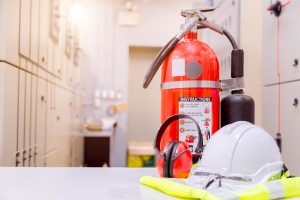
The Role of NIFS in Fire Safety Education
NIFS is an institute that has been providing intensive fire safety education and training to meet the emerging needs in society safely. People should be empowered to be denied adequate knowledge and skill in identifying, fighting, or reducing incidences of fire outbreaks. From the course perspective, it can be either for the homeowner who wants to ensure proper fire safety in houses or for businessmen who want to ensure fire protection for business premises.
To ensure the students get fully involved in fire safety courses, NIFS has the following fire safety programs; fire extinguisher training, where students get to practice industrial fire equipment, especially with the PASS technique, in this fully controlled region. This means that we offer you the advantages of university affiliation and a state board with our competency-based curriculum that will prepare you to manage fire emergencies efficiently.
Besides fire extinguisher training, courses offered by NIFS include fire rating assessment, evacuation and fire precaution methodology, innovation, fire safety solutions, etc. Women, children, citizens, and organizations exposed to these dangers need to be made aware so that they can change their environment and be informed in times of fire disasters.
Conclusion
Though fire extinguishers are wonderful tools for managing fires, knowing how to manage them is as important as having them with you. When you know about the PASS technique, the types of extinguishers that exist, and how the fire can be put out, then you and other people around can be safe. Furthermore, understanding and following the principles of the fire safety operational plan—the 4 Ps, including prevention, planning, protection, and practice—will do much to prevent a fire as well as to guarantee an effective response if a fire breaks out.
At NIFS, we have vowed to deliver the best training in fire safety so that people and companies have the professional tools they need to establish environments that can protect occupants from fire. If you require residential fire safety or require commercial fire protection, NIFS with its team of expert consultants is always ready to help.