
How the PDIS Safety Course Equips You with Emergency Response Skills
Industrial advancement is a defining hallmark of modern economies, driving progress across manufacturing, construction, logistics, and other vital sectors. However, the pursuit of industrial efficiency always carries inherent risks, making robust safety management a critical concern. When emergencies or unexpected incidents occur, the capability to respond promptly and skillfully can safeguard both lives and assets. Preparation in emergency response is not just an added benefit but a fundamental requirement for anyone entering high-risk work environments. This is where specialized professional education becomes a cornerstone.
At the forefront of developing such essential skills is the Post Diploma in Industrial Safety, widely known as the PDIS safety course. Offered at NIFS India, this program stands out for preparing individuals to handle complex safety challenges, especially in emergency situations. The comprehensive structure of this course covers not only theoretical knowledge but also fosters hands-on competency. By focusing on all facets of emergency response, the course makes its graduates proficient crisis managers and valuable assets for organizations keen on building safer workplaces. Those interested in building a career rooted in responsibility, technical knowledge, and leadership will find the PDIS safety course an empowering journey. To learn more about the course and application details, make sure to visit our website.
The Comprehensive Nature of the PDIS Safety Course
The PDIS safety course is meticulously structured to address all aspects of industrial hazards, emergency protocols, and global best practices within safety management. Its recognition under laws such as the Factories Act, 1948, further affirms its value as a minimum qualification for those aspiring to become safety officers in diverse industrial domains. At NIFS India, the course is designed to ensure that learners not only gain foundational knowledge but also grow in their ability to make informed, timely decisions during emergencies.
The industrial safety management course at NIFS India generally spans one year and accepts graduates with a background in engineering, technology, or science. Flexibility in course delivery—offered through classroom, online, or distance learning—accommodates a wide variety of students, including working professionals. Upon completion, participants are well-prepared for roles such as safety officer or safety engineer, fulfilling statutory compliance in sectors ranging from manufacturing and mining to petrochemicals and construction.
Building Emergency Response Skills in the PDIS Curriculum
Emergency preparedness is a central theme woven into every part of the industrial safety management course at NIFS India. The curriculum is developed to foster a proactive mindset and deliver practical knowledge through a series of interrelated modules.
- A major focus is the understanding of safety management systems, which provide a systematic approach to identifying, evaluating, and controlling risks. Learners explore methods for crafting detailed safety policies, planning effective emergency drills, and coalescing the cooperation of different departments under stressful conditions. The goal is to ensure every safety protocol functions seamlessly during an actual emergency.
- Legal and regulatory comprehension is another pillar, critical for safety officers. The course helps students master the requirements under Indian and international regulations, particularly the roles and duties of safety officers and safety management teams during high-stakes situations. This training ensures prompt, lawful action during emergencies, minimizing risk and avoiding legal pitfalls.
- Another cornerstone is advanced risk assessment and hazard identification. The ability to detect hazards before they escalate into disasters is what sets apart a truly effective safety officer. The PDIS curriculum deepens understanding of specialized techniques for identifying potential risks across physical, chemical, and biological domains. Students learn how thorough investigations into accidents and incidents can lead to improvements in safety protocols and prevent repeat occurrences.
- Occupational health and industrial hygiene get significant attention too. Participants gain critical knowledge on how to identify and manage exposure to hazardous substances, toxic fumes, or unsafe ergonomic practices—emergencies which often develop gradually but can cause significant harm. The course ensures all participants can execute safe evacuation procedures, administer first aid, and guide the proper use of personal protective equipment.
- Environmental management plays an equally vital role. The curriculum includes disaster management, planning for both common and rare emergencies, containment strategies for industrial spills, and mitigation measures during hazardous events like fires or explosions. Through the integration of sustainable practices, NIFS India ensures students gain skills that align with modern ecological concerns, making them assets in a world increasingly focused on responsible industry.
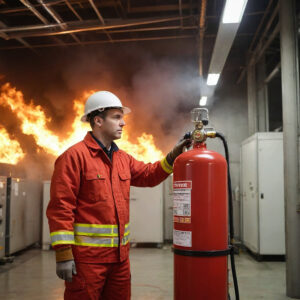
- Hands-on training in technical emergency skills is an essential feature of the industrial safety management course. The ability to use fire suppression tools, lead rescue operations, or supervise evacuations requires practice and composure. NIFS India includes fire safety, rescue operations, and specialized scenarios such as confined space rescues in practical exercises, ensuring every graduate leaves with real-world competency.
- Effective communication during emergencies is indispensable. The course molds future safety officers to relay instructions clearly, lead collaborative teams, and coordinate with external emergency services. Emphasis on leadership under pressure transforms students from passive responders into proactive leaders, prepared to guide organizations through turmoil.
The value of the safety officer diploma is ultimately cemented through industrial visits, workshops, and simulation-based learning. NIFS India’s commitment to experiential education immerses students in realistic emergencies, allowing them to apply their skills in time-sensitive and unpredictable scenarios. These practical experiences bridge the gap between classroom knowledge and on-site action, reinforcing the graduates’ readiness for real industrial settings.
What Sets the NIFS PDIS Safety Course Apart
While several institutions may offer similar qualifications, the PDIS safety officer diploma from NIFS India is distinguished by a focus on practical training, adaptability, and recognition. The course’s structure emphasizes applied learning through regular industrial visits and participation in drills that closely mimic the unpredictability and scale of actual emergencies. Such hands-on exposure is crucial for developing confidence and the calm judgment needed when every second counts.
Adaptability is another key strength of the industrial safety management course at NIFS India. The curriculum is not limited to any single industrial sector. Graduates are prepared for emergencies in an array of environments, whether they are working in high-rise construction, energy plants, chemical processing units, or large-scale warehouses. By incorporating practical knowledge from various industries into the course, NIFS India ensures its alumni are highly versatile and in-demand within the job market.
To maintain relevance, the PDIS safety course is frequently updated. Advances in technology have reshaped emergency prevention and response strategies, and NIFS India’s program integrates these innovations. From digital risk assessment tools and real-time monitoring devices to the inclusion of green technologies and data-driven safety protocols, students gain expertise at the forefront of industrial safety standards.
The NIFS India PDIS diploma is widely recognized by both educational and statutory authorities. This recognition is more than a formal acknowledgment—it is a requirement for many organizations that must appoint safety officers under Indian law. Having a recognized diploma elevates a graduate’s employability, ensuring they not only meet legal job criteria but are often preferred by employers seeking top talent in safety management.
The Professional Growth Offered by the PDIS Program
The PDIS safety officer diploma opens a broad dimension of professional opportunities. While immediate proficiency in emergency response is the course’s hallmark, graduates are also cultivated for long-term leadership in safety management. The industrial safety management course creates candidates who can oversee organizational safety programs, implement strategic prevention initiatives, and even mentor new entrants into the field.
Popular career outcomes include positions as safety officers and supervisors, where day-to-day management of risks and emergencies are core responsibilities. Graduates can also progress to managerial roles, lead safety audits, or act as consultants for multiple organizations. Specialists are in demand for dedicated areas, including environmental risk management and hazardous materials handling. The course’s strong legal alignment ensures that graduates frequently become the prime choice for organizations needing to comply with mandatory safety regulations.
More than professional advancement, the practical and ethical skills developed through NIFS India’s training empower individuals to make a meaningful impact on the safety and well-being of thousands. The culture of preparedness, responsibility, and continuous learning instilled through this course marks every graduate as a leader capable of transforming workplace safety.
Core Skills and Competencies Developed Through the PDIS Safety Course
An industrial safety management course must offer more than theoretical understanding; it must instill the ability to act purposefully and decisively when unplanned events occur. NIFS India’s PDIS curriculum does exactly that by cultivating a blend of analytical skill, practical execution, and regulatory insight.
Graduates learn to anticipate emergencies, developing the instincts needed for quick risk assessment and decision-making amid crises. The course encourages initiative, empowering students to orchestrate evacuation efforts, lead containment actions, and coordinate cross-functional teams. They grow proficient in carrying out detailed accident investigations, enabling organizations to identify root causes and improve future response protocols.
A distinguishing feature of the training is its focus on regulatory compliance. Every aspect of emergency management is taught with awareness of legal requirements and ethical standards. This ensures that every response is not only effective but also defensible within regulatory frameworks, a necessity for those holding a safety officer diploma.
Integrating Key Industry Concepts
From the start, the industrial safety management course at NIFS India incorporates both traditional emergency preparedness techniques and evolving technological solutions. As students progress, their safety officer diploma signals not just academic accomplishment but hands-on competency. NIFS India’s graduates are equipped to step into roles demanding accountability, technical knowledge, and unwavering calm in high-stress situations, making workplaces safer for all.
Conclusion
The unpredictable nature of industrial emergencies demands a well-developed mix of technical knowledge, decisive leadership, and unshakeable composure. The PDIS Safety Course at NIFS India is crafted to cultivate precisely these strengths, enabling participants to develop real-world emergency response skills. Its distinctive blend of practical training, legal awareness, and adaptation to the latest industry trends ensures graduates remain ahead of the curve. Those who complete this journey become more than responders—they become essential leaders in the pursuit of industrial safety.
To discover more about the curriculum, course details, and how to take the next step toward an impactful career in safety management, please visit our website for comprehensive information.
Sorry, the comment form is closed at this time.
metoprolol succinat
metoprolol succinat
metoprolol succinat
lasix furosemide price
lasix furosemide price
lasix furosemide price
lasix water pill over the counter
lasix water pill over the counter
lasix water pill over the counter
what is revatio
what is revatio
what is revatio